

Children’s Mental Health Week at King’s House School
In honour of Children’s Mental Health Week, some of our staff have explored the topic of children’s wellbeing and shared useful insights for parents who may be looking for a little guidance.
Understanding Children’s Mental Health
Children’s mental health relates to how children feel, process their emotions, and handle everyday life. Supporting a child’s emotional wellbeing is vital, as it plays a significant role in shaping the adult they will become. Our attachment style and how we view the world are formed throughout our childhood; therefore, nurturing children’s emotional wellbeing is crucial if we want to help them grow into secure, confident adults.
Support Children at School
At King’s House School, children have access to a number of staff who support their mental health and wellbeing, including their Form Teacher, Head of Year, and Pastoral Care Lead. In addition, specific support is available from our School Counsellor, School Nurse, Head of Learning Development, Emotional Literacy Support Assistants, and a designated School Counsellor.
We dedicate form time to mental health and wellbeing check-ins, including surveys that children complete to reflect on how they are feeling. These help to identify any concerning patterns and ensure key staff can respond promptly where needed. There is also a drop-in service every Tuesday lunchtime with our School Counsellor. If a child is worried about something, they can use our Worry Box to inform the School Counsellor in advance so that a check-in can be arranged.
We are proud to have a dedicated and caring team who know the children well and are always willing to help.
King’s House School prioritises working together in partnership with children and families to support each individual child. We believe open and regular communication between school and home is key to ensuring children feel safe and supported.
Supporting Children at Home
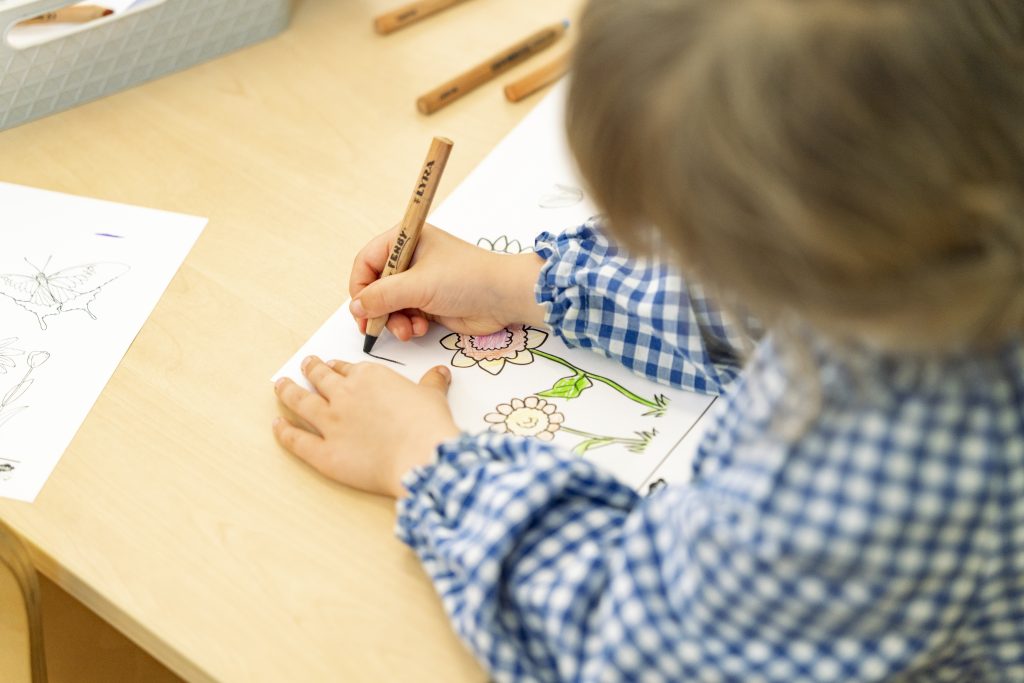
One of the key ways families can support children’s emotional wellbeing is through play. Just 20 minutes of one-to-one, fully attentive play each day — whether that’s cooking, drawing, painting, spending time outdoors, or even playing a video game together — can help children feel truly seen.
Don’t be afraid to be silly and tune into your inner child during play. You may be surprised by what your child shares while you are playing together. Play helps to relax the brain, making it easier for children to open up. Taking an interest in what they are doing — no matter what it is — and allowing your child to show and explain things to you helps them feel secure and important.
If you start to sense that your child is struggling with something, the most important thing you can do is communicate with them openly – let them know that nothing is off the table. It’s so important that children feel they can come to you and trust that you are ready to listen. Even if they need some time, maintaining open communication reassures them that you are there when they are ready. Your child may choose to open up at a time you least expect; in that moment it is vital to be fully attuned to them to avoid shutting them down, which could make it harder for them to express themselves in the future.
If your child does open up, give them your full attention. Reflecting back what you’ve heard — for example, “So what I’m hearing is… have I got that right?” — allows the opportunity to confirm or clarify your understanding. Sometimes it can be difficult for children to put their feelings into words. In these moments, asking, “Can you show me?” can be helpful. You might offer some paper and pens and see if your child would like to draw what is worrying them.
Spotting Everyday Signs
Signs that your child might be struggling can look different for every child. Some common indicators to look out for include an ongoing negative shift in their behaviour or in how they view themselves, as well as emotional changes, such as a drop in self-esteem, are just as important to notice.
If you sense a shift in the way your child communicates with you — for example, if they begin to withdraw or shut down — this could be a sign that something is troubling them. It’s also important to trust your parental instinct. If you feel worried, that in itself can be a sign that your child may need some additional support.
Of course, it’s completely normal for everyone to have a bad day from time to time. Time is often a helpful indicator when distinguishing between a temporary dip and a more significant concern. We all experience ups and downs, but what matters is how we process those feelings and move forward. If your child has been struggling for a while and you feel their difficulties may be increasing, that may be the time to seek further support.
Summary
Some simple daily habits families can adopt to support their children’s mental health include prioritising play and quality time together — sharing meals, leaning into your inner child, planning fun days out, talking with your child, and putting your phone down to be fully present.
King’s House School offers a wide range of mental health support for families, with dedicated staff who are always happy to help. We strongly encourage families to reach out if they need support and to maintain open communication with key school staff regarding any concerns. Working together in partnership is the key to ensuring every child feels supported.
For additional guidance, King’s House parents can access Tooled Up, a free online resource offering advice on supporting children’s mental health. The official Children’s Mental Health Week website also provides helpful resources for anyone interested.
Read more posts from King’s House School

Extended Management Team Announcement
New Extended Management Team The school has operated successfully with a similar management and leadership structure for a number of years now,...

International Women’s Day Celebrations
International Women's Day Celebrations ✨ King’s House School would like to wish you all a belated Happy International Women's Day! We had many...
New Nursery Offerings Announcement
New Nursery Offerings from September 2026 We are delighted to share that from September 2026, our Nursery Department will be offering longer...

Charity Activity at King’s House
Charity Activity at King's House It's been a busy few weeks of charity activities at King's House, with involvement from all across the School....